Are Online Course Certificates Still Meaningful?
Online course certificates are under increasing scrutiny in the AI era.
In the AI era, where courses can be generated in minutes, organisations are asking whether these certificates still carry real professional value.
In the AI Era, Who Verifies Your Training Content?
AI Can Generate a Course in 30 Minutes.
But Who Verifies It?
Artificial intelligence has changed the economics of course creation.
Today, anyone can generate:
- A full curriculum outline
- Detailed lesson scripts
- Learning outcomes
- Multiple-choice assessments
- Case studies
- Even a certificate template
All in under an hour.
The barrier to entry has collapsed.
But here is the uncomfortable question very few are asking:
Who verifies it?
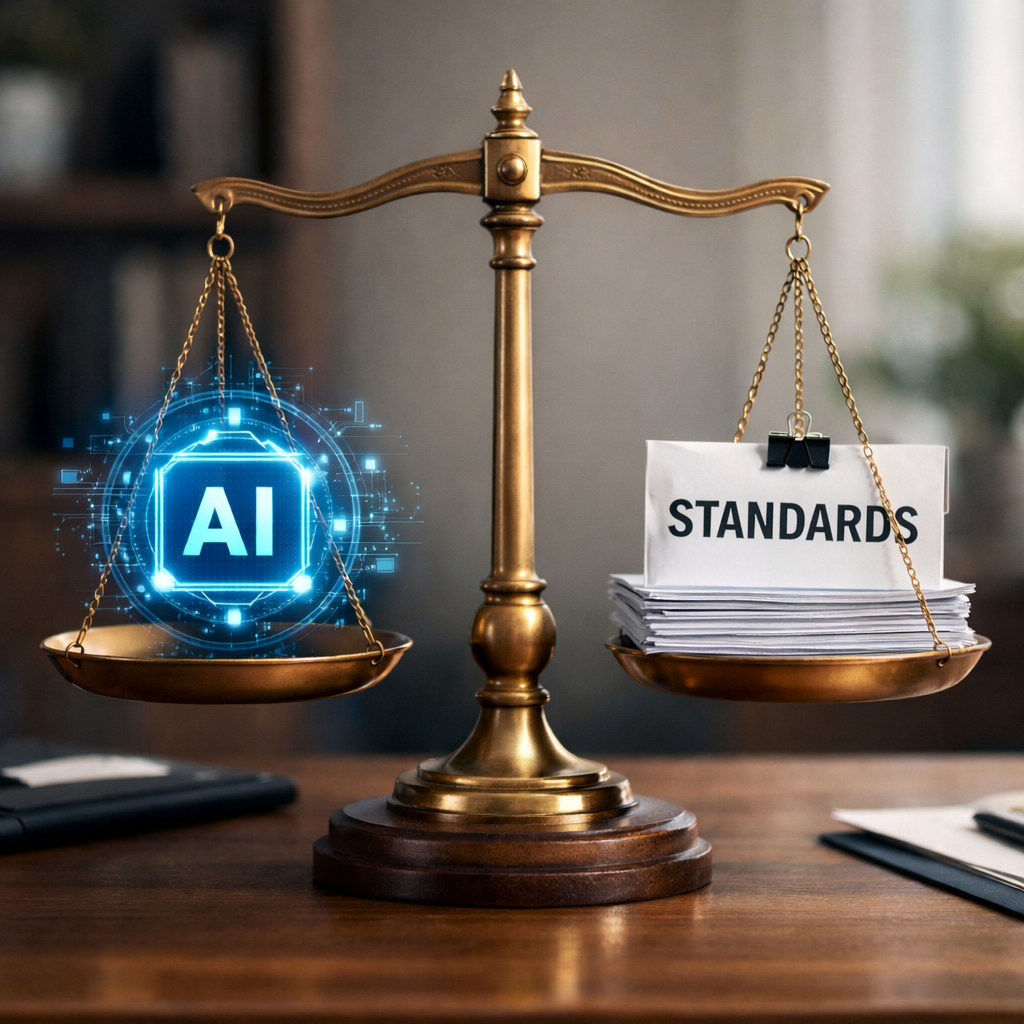
The AI Course Boom — And the Quiet Risk Behind It
AI tools are extraordinarily capable at generating structured content. They can sound authoritative, balanced, and professional. Even free versions of large language models can produce well-organised course material that appears ready for publishing.
However, sounding credible is not the same as being credible.
AI is trained to predict language patterns. It does not automatically:
- Verify regulatory compliance
- Ensure professional alignment
- Confirm industry currency
- Guarantee assessment validity
- Validate learning-hour calculations
- Confirm instructional design integrity
In many cases, course creators paste AI outputs directly into slides, record a voiceover, and publish.
The content may look polished.
But polish is not proof.
The Common Questions Organisations Are Beginning to Ask
As AI-generated training increases, a predictable shift is happening. HR departments, compliance managers, and corporate learning teams are asking sharper questions:
1. “How do we know this course is accurate?”
AI can confidently generate incorrect or outdated information. Without subject-matter review, inaccuracies may go unnoticed.
This becomes especially risky in:
- Legal and regulatory training
- Health and safety instruction
- Financial compliance
- Technical or specialised professional fields
In these areas, “almost correct” is not acceptable.
Professional review introduces accountability. It ensures content is aligned with current standards and industry expectations.
2. “Are the learning outcomes measurable?”
AI frequently generates learning outcomes such as:
- “Understand leadership principles”
- “Learn about data protection”
- “Gain knowledge of project management”
These are vague and often non-assessable.
Professional standards bodies evaluate whether outcomes:
- Use measurable verbs
- Align with assessments
- Reflect competency expectations
- Correspond to defined levels of professional development
Without this alignment, assessment becomes superficial.
A quiz does not equal competence.
3. “Does this online course certificate carry professional weight?”
There is a difference between:
- A certificate of completion
- A certificate aligned with recognised professional standards
AI can generate a beautiful PDF certificate. It can even include accreditation-style language.
But professional recognition depends on:
- Notional learning time verification
- Structured curriculum review
- Assessment integrity
- Evidence of defined standards
- Clear level classification
Without oversight, certification risks becoming branding rather than validation.
And when certificates lose meaning, the entire professional development ecosystem suffers.
4. “Was this content independently reviewed?”
In traditional education and professional development, content passes through:
- Peer review
- Academic scrutiny
- Instructional design validation
- Compliance checks
In the AI era, much of that friction is gone.
Speed has replaced scrutiny.
Professional standards bodies restore structured review by introducing:
- Independent evaluation
- Curriculum mapping
- Quality assurance processes
- Clear accountability frameworks
This is not slowing innovation. It is safeguarding integrity.
AI Is Not the Problem
It is important to be clear:
AI itself is not the issue.
AI is a powerful drafting tool. It accelerates productivity and lowers development costs. Used responsibly, it enhances quality.
The problem is unverified AI.
Content generation is not quality assurance.
Fluency is not professional validation.
Structure is not demonstrated competence.
AI can draft a course.
But it cannot independently certify that the course meets professional standards.
That requires defined criteria and human oversight.
The Emerging Trust Gap in Online Learning
We are entering a phase where:
- Anyone can publish a course
- Anyone can issue a certificate
- Anyone can claim “accreditation”
The volume of training will increase dramatically.
But trust may decrease.
When employers begin to encounter:
- Superficial training
- Misaligned outcomes
- Inflated certificates (Unreviewed. Overvalued. Unverified. Unvalidated.)
- Inconsistent standards
They respond by questioning all certificates.
That harms:
- Ethical course providers
- Serious training organisations
- Learners who invested time and money
The market does not collapse because of innovation.
It collapses when credibility erodes.
Why Professional Standards Bodies Matter More in the AI Era
Professional standards bodies exist to create clarity where volume creates confusion.
Their role includes:
- Evaluating curriculum structure
- Confirming alignment with professional levels
- Verifying notional learning time
- Assessing outcome-to-assessment alignment
- Reviewing instructional integrity
- Ensuring assessment robustness
This creates an external layer of validation.
It introduces independence.
And independence creates trust.
In an AI-saturated environment, third-party verification becomes more important, not less.
The Difference Between Content and Competence
There is a subtle but extremely important distinction in professional development:
Content delivers information.
Standards validate competence.
AI can generate excellent content.
But competence requires:
- Defined performance criteria
- Measurable benchmarks
- Clear assessment mapping
- Evidence-based evaluation
Professional approval confirms that a course is not only informative, but structured to produce measurable development.
The Corporate Perspective
From a corporate standpoint, the risks are real, measurable, and significant.
When organisations invest in training, they want assurance that:
- The training aligns with recognised standards
- The learning time is legitimate
- The assessment is credible
- The provider is accountable
In regulated industries, this becomes even more imperative.
A standards-aligned course demonstrates:
- Structured governance
- Quality control
- Compliance awareness
- Professional credibility
It shifts training from marketing to measurable development.
For Ethical Course Creators: Accreditation Is a Differentiator
There is another side to this conversation.
Many course creators use AI responsibly.
They:
- Review and fact-check outputs
- Apply domain expertise
- Validate references
- Design meaningful assessments
For these creators, professional accreditation becomes a strategic advantage.
It signals:
- Transparency
- Commitment to standards
- Willingness to undergo review
- Alignment with defined benchmarks
In a crowded market, differentiation will not come from who uses AI.
It will come from who verifies quality.
The Question That Will Define the Next Phase of Online Learning
Until recently, the dominant question was:
“Can you create a course?”
Today, the better question is:
“Can you prove it meets a professional standard?”
As AI continues to lower creation barriers, verification becomes the new value.
The future of professional education will not be defined by who can generate the most content.
It will be defined by who can demonstrate structured integrity.
Credibility Is the New Currency
In a world flooded with AI-generated material, credibility becomes scarce.
And scarce resources become valuable.
Professional standards bodies provide:
- Structured review
- Defined criteria
- Independent validation
- Ongoing accountability
They protect:
- Learners
- Employers
- Ethical providers
- The integrity of professional development
Innovation should be welcomed.
But innovation without governance creates instability.
In the AI age, credibility is not optional.
It is non-negotiable.
Final Thought
AI can generate a course in 30 minutes.
But credibility still requires structure, review, and standards.
And as the volume of training increases, the organisations that invest in independent professional validation will be the ones whose certificates continue to carry meaning.
Because in the end, content may be abundant.
But trust must be earned.
Credibility Should Be Demonstrated, Not Assumed
In a market increasingly shaped by AI-generated content, professional credibility cannot rely on presentation alone.
Certificates may be easy to produce.
Standards are not.
For organisations committed to meaningful professional development, independent validation is not an administrative formality, it is a signal of integrity.
For course providers who value long-term reputation, external review demonstrates that:
- Learning outcomes are measurable
- Assessments are structured and aligned
- Notional learning time is verified
- Content has undergone independent evaluation
- Professional standards are defined and applied
This is how trust is preserved.
The International Professional Learning Standards Organisation (IPLSO) exists to safeguard the integrity of professional education by applying structured, transparent standards to course approval and accreditation.
In the AI era, the question is no longer whether content can be generated.
The question is whether it has been independently validated.
If your organisation develops or approves professional training, consider what independent standards say about its quality.
Because in a world where content is abundant, credibility is decisive.
Frequently Asked Questions
Online course certificates can be recognised by employers, but their value depends on how the course was developed, assessed, and validated.
Employers typically look beyond the certificate itself and consider:
- Whether the course is aligned with recognised professional standards
- Whether learning outcomes are measurable and competency-based
- Whether assessments meaningfully evaluate understanding
- Whether the provider is independently reviewed or accredited
A certificate of completion alone does not automatically signal professional credibility. In many cases, employers assess whether the course was:
- Accredited by a recognised standards body
- Designed with structured learning hours
- Reviewed for quality assurance
- Supported by demonstrable skills development
In the AI era, where course creation has become faster and more accessible, employers are increasingly attentive to independent validation.
In short, online course certificates are recognised when they represent verified standards, not just participation.
To verify whether an online course is accredited, you should look beyond logos and marketing claims and confirm independent recognition.
Start by checking whether the course provider clearly names the accrediting or standards body.
– Reputable accreditation should include:
– The full name of the organisation
– A verifiable website
– A description of the standards or criteria applied
– A provider listing or public register
Next, visit the accrediting body’s website directly. Confirm that:
– The provider appears in their official directory
– The course aligns with defined standards or levels
– The accreditation process involves review and quality assurance
Be cautious of vague terms such as “internationally accredited” or “CPD approved” without transparent evidence of evaluation criteria.
True accreditation involves independent review, measurable learning outcomes, structured assessment, and accountability, not simply a certificate issued at course completion.
Yes, AI-generated courses can be accredited, but only if they undergo independent review and meet defined professional standards.
The use of AI in course development does not automatically disqualify a programme from accreditation. AI can be a drafting tool. However, accreditation bodies assess the final course based on criteria such as:
- Clearly defined and measurable learning outcomes
- Alignment between outcomes and assessments
- Verified notional learning hours
- Structured curriculum design
- Quality assurance and review processes
- Evidence of competency development
What matters is not whether AI was used, but whether the course has been independently evaluated for accuracy, alignment, and professional integrity.
AI can generate content quickly. Accreditation ensures that the content meets established standards.
In the AI era, governance remains essential, regardless of how the material was produced.
To verify whether an online course is accredited, you should look beyond logos and marketing claims and confirm independent recognition.
Start by checking whether the course provider clearly names the accrediting or standards body. Reputable accreditation should include:
- The full name of the organisation
- A verifiable website
- A description of the standards or criteria applied
- A provider listing or public register
Next, visit the accrediting body’s website directly. Confirm that:
- The provider appears in their official directory
- The course aligns with defined standards or levels
- The accreditation process involves review and quality assurance
Be cautious of vague terms such as “internationally accredited” or “CPD approved” without transparent evidence of evaluation criteria.
True accreditation involves independent review, measurable learning outcomes, structured assessment, and accountability, not simply a certificate issued at course completion.