
What Determines Training Course Quality?
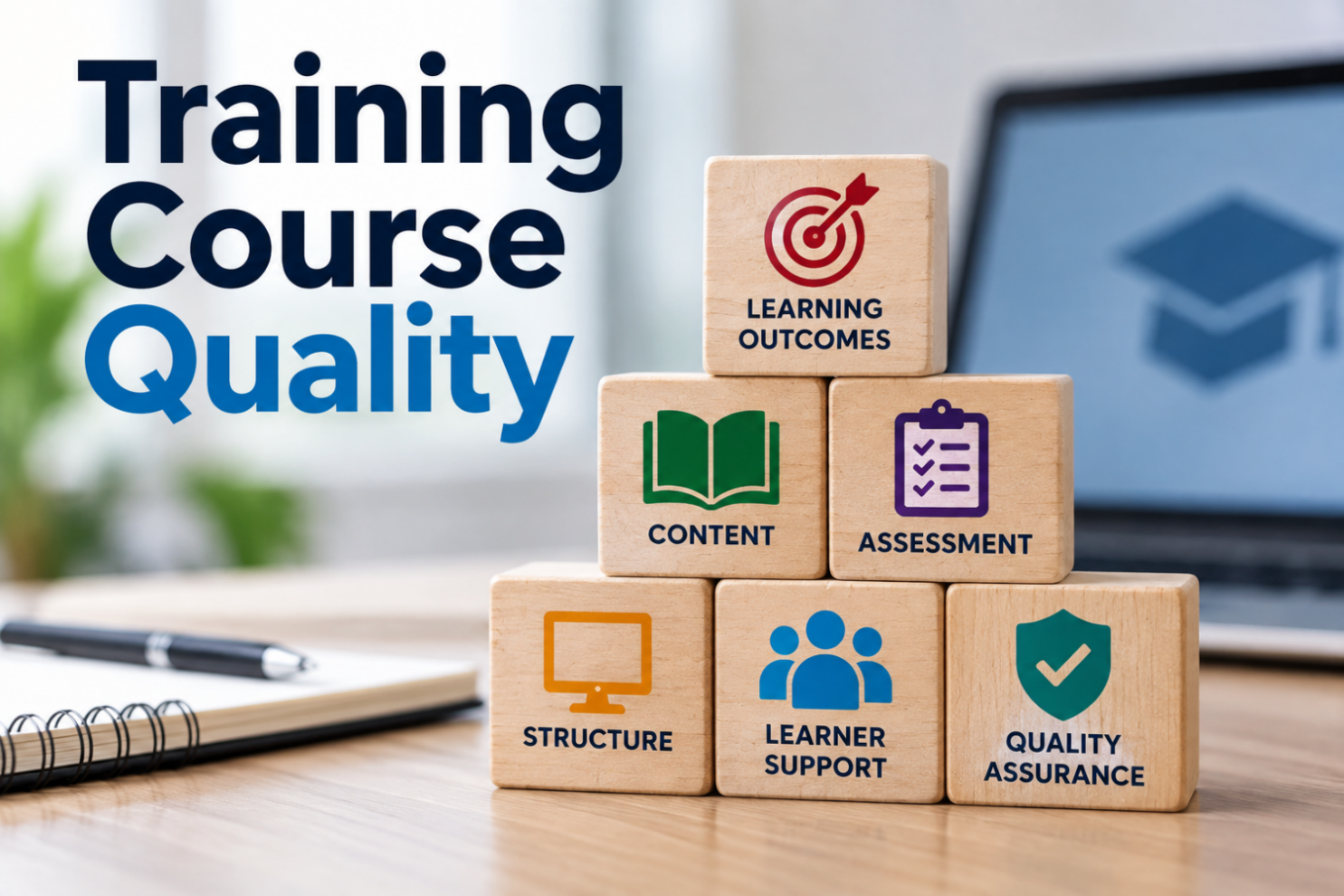
What makes a training course high quality? It is more than a collection of information presented to learners. It should have a clear purpose, well-defined learning outcomes, relevant course content, appropriate assessment, and a structure that supports learning.
These elements should also work together. Learning outcomes should define what learners are expected to know or be able to do. Course content should provide the knowledge and skills needed to achieve those outcomes, and assessment should provide a reasonable way to determine whether the outcomes have been achieved.
Course quality also includes factors such as logical progression, clear instructions, suitable learning resources, and appropriate learner support.
This means that training course quality cannot be judged by looking at one element in isolation. It depends on how effectively the different parts of the course work together to create a coherent and meaningful learning experience.
Clear Learning Outcomes Provide Direction
Learning outcomes provide the foundation for course design. They describe what learners should know or be able to do after completing the course and establish what the course is intended to achieve.
Effective learning outcomes should be clear, relevant, and appropriate for the level and purpose of the training. They should also be realistic within the available course duration and learning environment.
This gives course designers a clear reference point when deciding what to include. Content, activities, resources, and assessment can then be selected according to whether they contribute to achieving the learning outcomes.
Clear learning outcomes also make quality assurance more meaningful. Instead of asking only whether a course contains enough information, reviewers can examine whether the course provides learners with a reasonable opportunity to achieve what it claims they will achieve.
Course Content Should Support the Learning Outcomes
Course content should give learners the knowledge and skills they need to achieve the stated learning outcomes.
This does not mean that more content creates a higher-quality course. Adding information that does not contribute to the learning outcomes can make a course unnecessarily long and may distract from what learners actually need to learn.
The depth of the content should also match the level of the course. An introductory course and an advanced course on the same subject may cover similar topics, but the level of detail, practical application, and expected learner performance should be different.
Good course design requires careful decisions about what to include, how much detail is needed, and how the content contributes to what learners are expected to achieve.
Assessment Should Measure the Learning Outcomes
Assessment provides a way to determine whether learners have achieved the stated learning outcomes.
The type of assessment should match what learners are expected to demonstrate. If a learning outcome requires learners to understand or recall information, a knowledge-based assessment may be appropriate. If the outcome requires learners to perform a task or apply a skill, the assessment should provide an opportunity to demonstrate that ability.
This alignment is important. A course may provide excellent content, but if the assessment does not measure the stated learning outcomes, it becomes difficult to determine whether learners have actually achieved them.
Assessment should be relevant, appropriate for the level of the course, and clearly connected to what the course claims learners will know or be able to do.
Course Structure Should Support Learning
A high-quality course should present learning in a logical and organised way.
The sequence of topics matters. Learners may need to understand basic knowledge or develop foundational skills before moving on to more complex tasks. A well-structured course allows learning to build progressively rather than presenting topics as separate pieces of information.
Individual lessons and modules should also have a clear purpose within the course. Learners should be able to understand where they are in the learning process and how each part contributes to what they are expected to achieve.
Good structure does not make learning easier by reducing the required level of knowledge or skill. It makes the learning process clearer and helps learners progress towards the intended learning outcomes.
Learners Need Appropriate Support
Learner support is another important part of course quality. Learners should have access to the information, instructions, resources, and guidance they need to progress through the course.
The type of support required will depend on the course and how it is delivered. A self-paced online course, for example, may rely heavily on clear instructions, examples, feedback, and supporting resources. Instructor-led training may provide more opportunities for learners to ask questions and receive direct guidance.
Learner support does not mean removing challenges or making the course easier. It means providing learners with the support they reasonably need to participate in the learning process and work towards the intended learning outcomes.
When learner support is considered as part of course design, it contributes to a more accessible, organised, and effective learning experience.
Quality Assurance Brings the Elements Together
Quality assurance should not focus only on whether individual course elements are present. A course may have learning outcomes, content, assessment, resources, and learner support, but that does not automatically mean these elements work well together.
Quality assurance considers how the different parts of the course support its overall purpose. It examines whether the learning outcomes are appropriate, whether the content supports those outcomes, whether the assessment measures them, and whether the course structure and learner support enable learners to progress effectively.
This is why course quality is closely connected to alignment. Each element has a specific purpose, but its value also depends on how well it connects with the other elements.
A quality review should consider the course as a complete learning experience rather than simply checking whether individual requirements have been included.
Course Quality Comes From Alignment
A high-quality training course is not defined by one feature. Good content cannot compensate for unclear learning outcomes, and well-written learning outcomes have limited value if the assessment does not measure them.
Course quality comes from the relationship between all these elements. Learning outcomes provide direction, content supports learning, assessment measures achievement, structure guides progression, and learner support helps learners engage with the course effectively.
When these elements are aligned, the course has a clear purpose and provides learners with a meaningful opportunity to achieve the intended outcomes.
This alignment is one of the foundations of effective course design and quality assurance.
Building Quality Into Course Design
Course quality should be considered throughout the design and development process, not only when a course is complete and ready for review.
For training providers, this means regularly reviewing whether course content, assessment, structure, resources, and learner support remain aligned with the intended learning outcomes.
Quality assurance provides a structured way to evaluate these elements and identify areas where a course can be strengthened.
At IPLSO, our course review and accreditation process considers these and other quality factors to evaluate whether courses meet appropriate standards for professional learning.
Course quality is not determined by any single element. It comes from how effectively the different elements work together to support learning.
This article provides an overview of some of the main elements that contribute to training course quality. In the next articles in this series, we will look more closely at individual aspects of course design and quality assurance, including learning outcomes, course content, assessment, and alignment.
IPLSO supports quality standards in professional learning through independent course and training provider accreditation.
Follow IPLSO on LinkedIn for more posts and updates on course quality, accreditation and professional learning.